

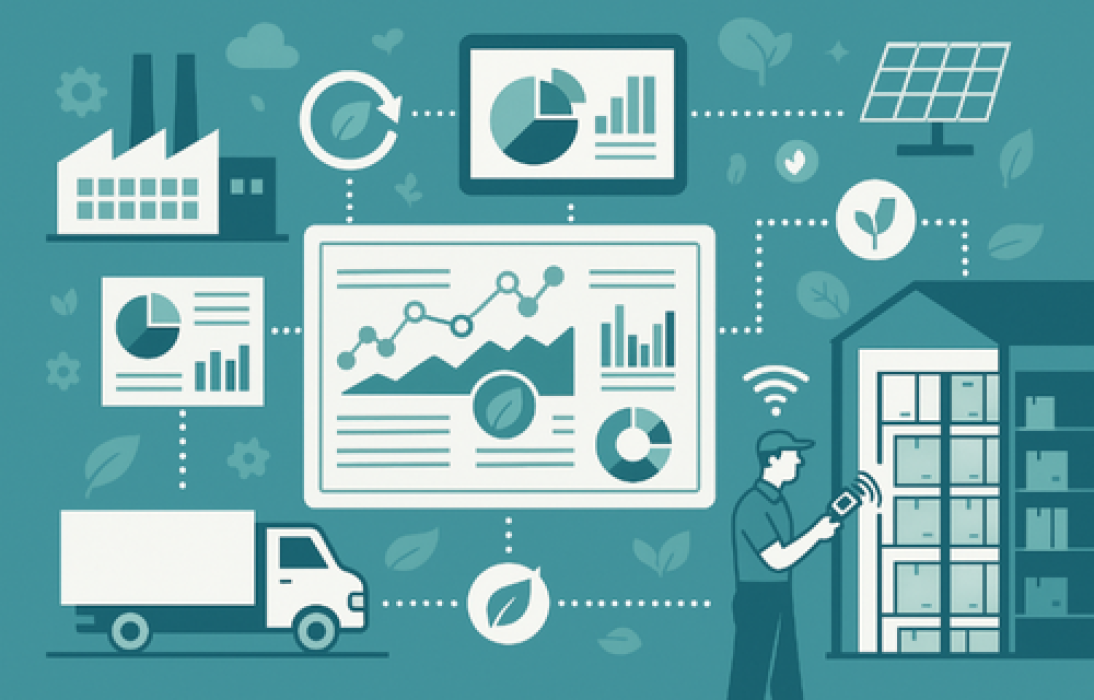
Sustainability and digitalisation have become defining themes within modern supply chains. While many organisations still see them as separate initiatives the reality is that they are deeply connected. Digital technologies that increase visibility and accuracy also reduce waste improve asset utilisation and deliver the transparency needed for ESG commitments. In other words, the road to a sustainable supply chain is a digital one.
At Mieloo and Alexander we see this shift every day. Companies want to reduce emissions and improve circularity but cannot achieve meaningful progress without reliable data. Digital transformation in logistics is therefore no longer optional. It underpins every sustainability ambition and enables concrete measurable action across the entire supply chain.
Why Sustainability and Digitalisation Belong Together
Sustainable supply chain technology starts with better information. Organisations can only reduce waste improve resource use and report ESG performance accurately when they know what they have where it is located and how it moves.
However many supply chains still struggle with manual registrations outdated systems and blind spots in inventory flows. This results in unnecessary transport movements high levels of safety stock energy use in overfilled warehouses and products that expire before they are used. Each of these inefficiencies carries both financial and environmental cost.
Digital tools such as RFID real time tracking and automated data capture eliminate these blind spots. With item level visibility companies gain the insights required to align operational efficiency with sustainability goals.
Real Time Visibility as the Foundation for Green Operations
Real time visibility is one of the strongest levers for reducing environmental impact. Automated tracking solutions such as RFID reduce the need for physical checks and manual counting which lowers labour intensity and improves accuracy. Teams no longer move across facilities to search for assets because data shows exactly where items are located.
This has a direct impact on sustainability performance. Fewer unnecessary transport movements reduce emissions and better asset visibility supports reuse, rotation and maintenance programs. Many organisations discover that they can redeploy existing equipment more effectively rather than purchasing new items which improves circularity and lowers resource consumption.
Reliable data also enables smarter utilisation of space. Warehouses no longer need excessive buffers to compensate for uncertainty which reduces energy usage in storage environments. These improvements demonstrate how digitalisation strengthens the ESG profile of modern logistics operations.
RFID and Sustainability: A Practical Combination
RFID plays a central role in connecting digital transformation with sustainability outcomes. By automating data collection organisations get a complete picture of inventory flows without manual effort. This supports several sustainability objectives:
- Reduced waste because materials, components and products are used before they expire or become obsolete
- Lower resource consumption due to better asset utilisation and fewer redundant purchases
- Less transport and handling movements because the location of assets and goods is always clear
- Improved circularity through track and trace capabilities that enable repair reuse and return flows
- Transparent ESG reporting supported by accurate operational data
For many companies RFID becomes the key enabler for sustainable supply chain technology. It provides the precision needed to make environmental improvements measurable and to scale successful practices across the organisation.
Digitising Processes to Improve ESG Supply Chain Performance
Sustainability is now a core expectation from customers, regulators and partners. With increasing pressure to meet ESG reporting standards organisations must demonstrate how they reduce environmental impact through measurable actions.
Digital transformation in logistics helps companies:
- Provide verifiable data for ESG reporting frameworks
- Reduce emissions by streamlining internal and external flows
- Improve traceability for compliance and responsible sourcing
- Eliminate operational waste through automated data capture
- Align sustainability initiatives with business performance goals
At board level environmental and digital priorities often sit in different programmes yet the most successful organisations combine them. Digitalisation becomes the engine of sustainability because it reveals inefficiencies that were previously invisible.
How to Act Now: Building a Digital and Sustainable Supply Chain
Achieving a green and data driven supply chain does not require a massive transformation from day one. Companies can start with small, high impact steps such as real time tracking of reusable assets, automating inventory counts or adopting RFID for high value product flows. These initiatives deliver measurable improvements quickly and create a solid foundation for broader digitalisation and sustainability programmes.
As organisations gain visibility they can optimise routes, reduce waste, shrink their carbon footprint and build more resilient and accountable logistics operations. The transition to a sustainable supply chain becomes a structured journey supported by reliable data rather than a collection of isolated projects.
Why Companies Choose Mieloo and Alexander
With 25 years of experience in supply chain visibility, inventory accuracy and automation we support organisations in making their logistics processes both digital and sustainable. Our solutions combine RFID, intelligent tracking systems and data driven software to help companies reduce waste improve resource usage and create transparent ESG supply chains.
Whether you are starting with a pilot or scaling digital transformation across multiple sites we provide the expertise and technology needed to deliver reliable measurable and repeatable results.